29.6 °C


Have you ever wondered what’s the story of the decorative fountain at Erzsébet Square? Did you know that originally it stood somewhere else? Its allegorical figures, war scars, and rebirth make it one of Budapest’s most underrated monuments.
Budapest has its fair share of sights and points of interest that have moved or changed place over the course of the centuries. Just like the Gloriette that was relocated from Pest's Heroes' Square all the way to to Buda's Széchenyi Hill, this fountain would be hard to find with a pre-war giude book.
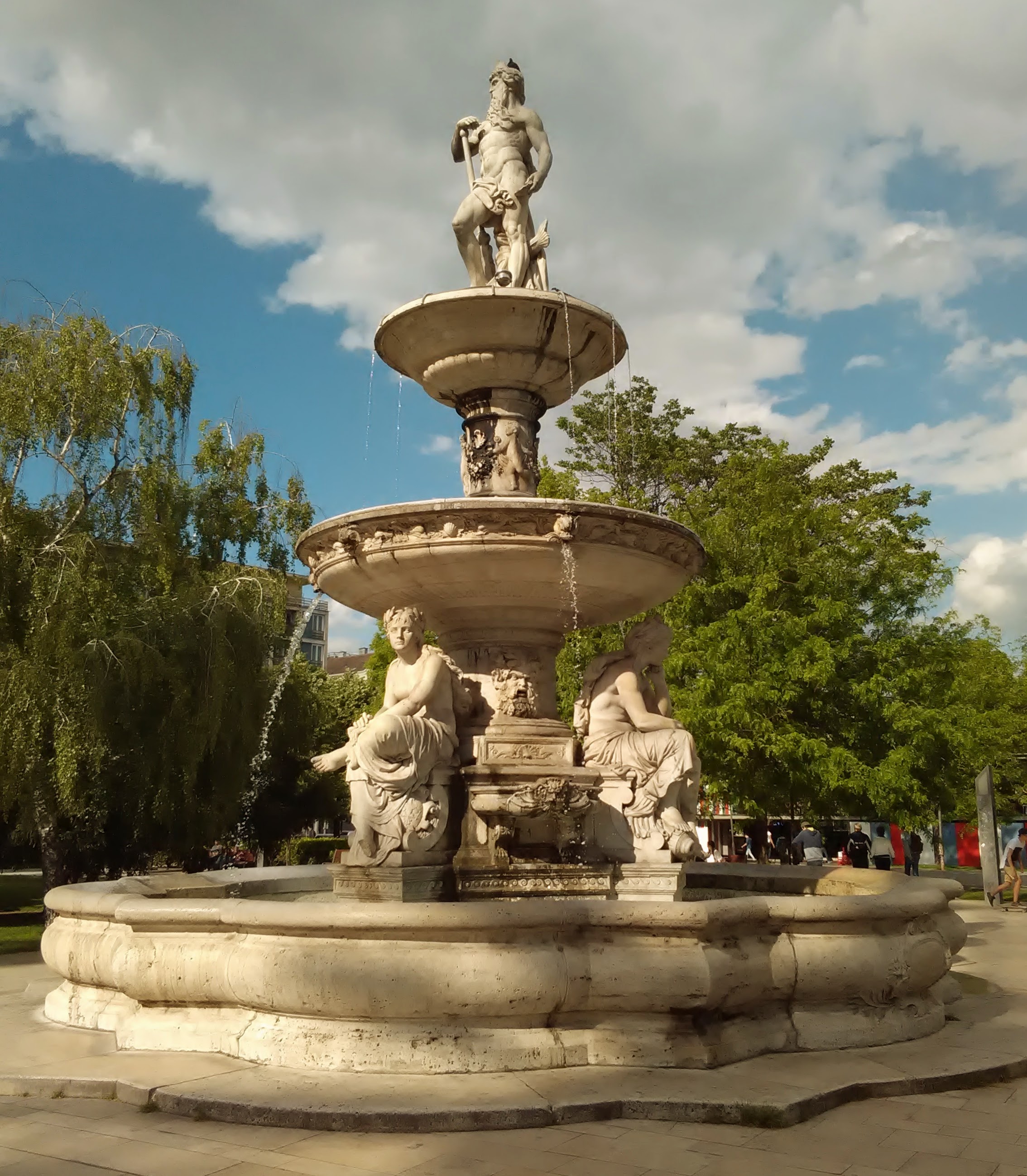
In the heart of Budapest, where Erzsébet Square offers a green respite amid the bustle of the city, rises one of the capital’s most graceful monuments: the Danubius Fountain. This neo-Renaissance masterpiece is more than just a decorative work of stone and water; it is a story sculpted in allegory, a tale of Hungary's rivers, and a symbol of renewal across turbulent centuries.
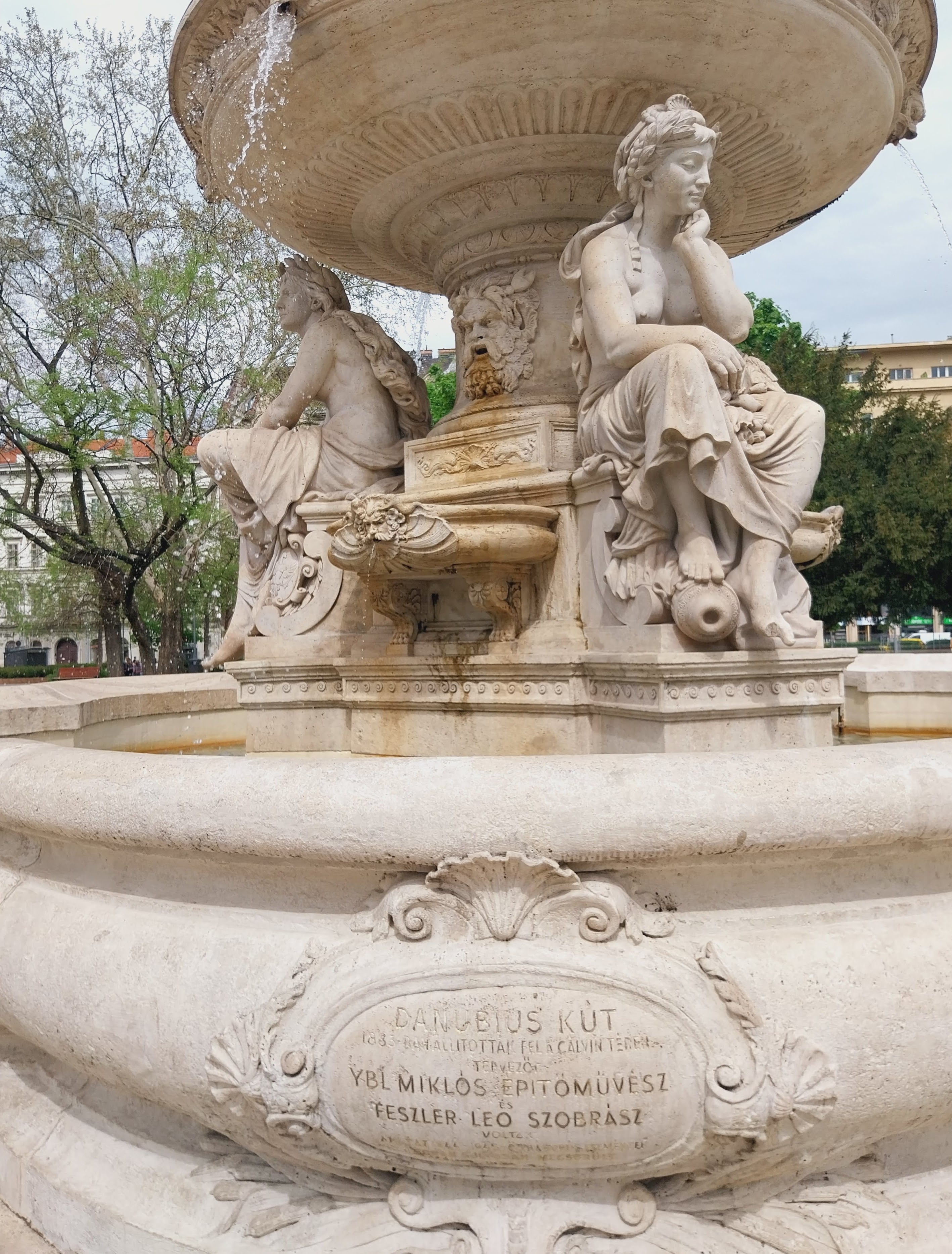
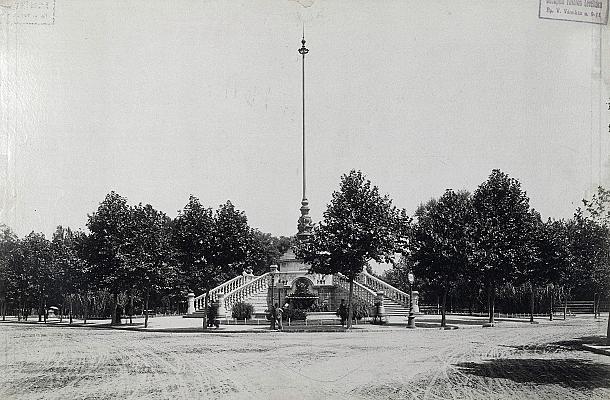
The fountain was originally created in 1883 to adorn Kálvin Square, a gesture of generosity from the Pesti Hazai Első Takarékpénztár, one of Hungary’s most prominent savings banks of the era, which had it's offices on the square. The design came from none other than Miklós Ybl, the celebrated architect behind the Opera House and Saint Stephen’s Basilica, while the sculptural group was entrusted to Fessler Leó. Their collaboration resulted in a richly symbolic work. At its center stands Danubius, the male personification of the Danube, radiating strength as the river that unites the nation. Around him gather three female figures, each representing another great Hungarian waterway: the Tisza, Dráva, and Száva. Together, they embody both the lifeblood of the land and the unity of its natural heritage.
 The fountain in its original place with the Savings Bank Building in the background
Source Fortepan 231589 / Bor Dezső
From its very beginnings, the Danubius Fountain was a technical as well as an artistic triumph. Its massive basins, hewn from stone quarried at Budakalász, weighed so much that a specially reinforced wagon had to be constructed. At Kálvin Square, it became a defining element of the square, a rendezvous point and landmark where water, stone, and urban life met in harmonious balance.
But the 20th century was not kind to the fountain. During the heavy bombardments of the Second World War, the sculptures suffered serious damage. In 1949, what remained was dismantled, and only fragments survived. One figure—Száva—escaped destruction and was hidden away in a courtyard, an almost forgotten relic of Budapest’s lost grandeur. For a time, it seemed the fountain might never return.
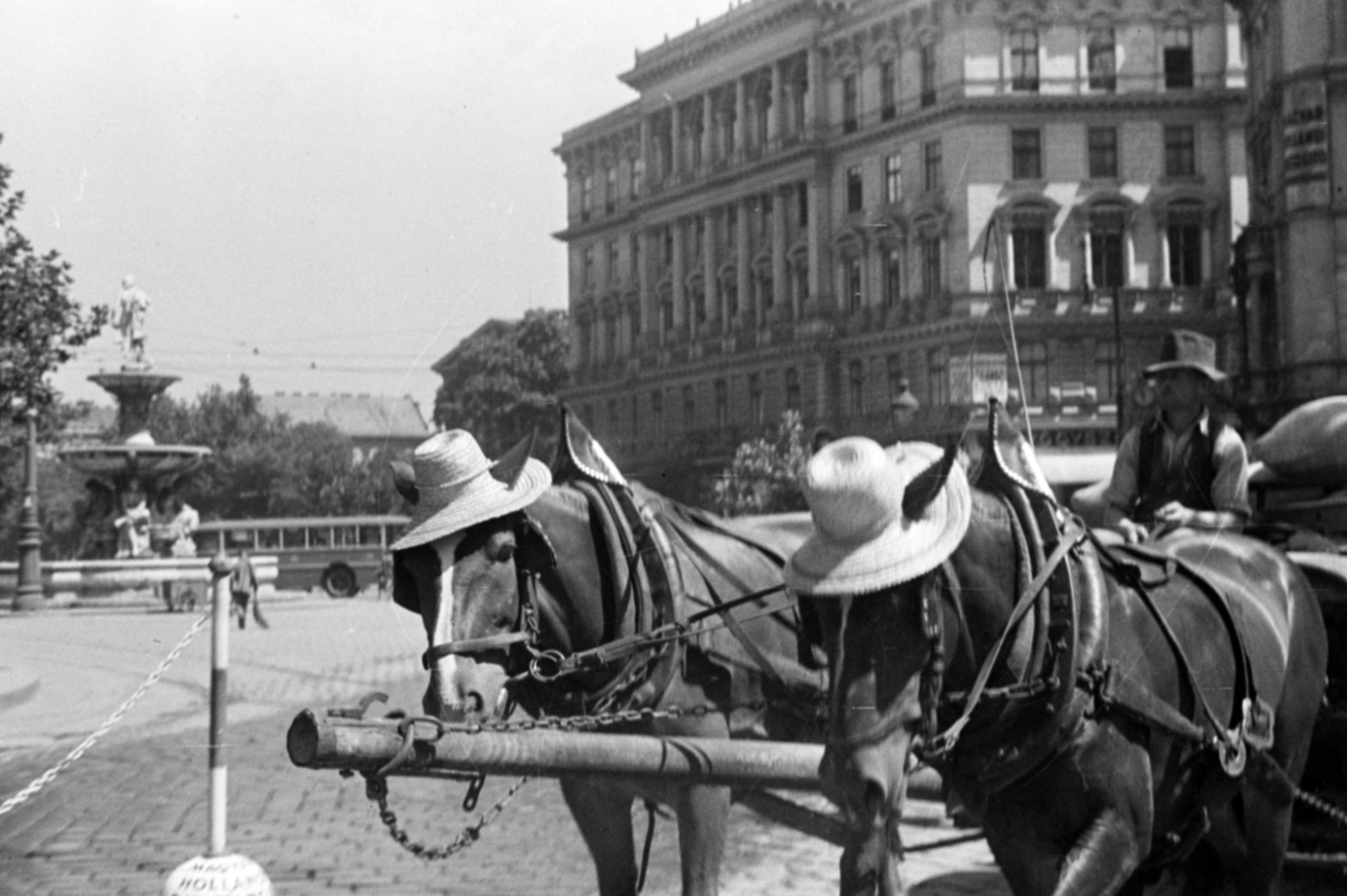 Kálvin Square with the fountain in 1940
Source: Fortepan 180498 / Bojár Sándor
Yet the city’s determination prevailed. In the 1950s, restoration work began under the guidance of sculptor Dezső Győri, who meticulously recreated the missing figures and basins. Rather than returning to Kálvin tér, however, the decision was made to install the renewed fountain at Erzsébet Square, then known as Engels Square, where it was unveiled in July 1959. There, it quickly established itself as a new focal point, carrying its symbolism into a different era and urban setting.
 The lonely damaged figure of the Sava River in 1973 at 1-3 Ráday Street.
Source: Fortepan 25698 / Ferencvárosi Helytörténeti Gyűjtemény
Time, pollution, and vandalism once again took their toll in the decades that followed. By the 2010s, the fountain bore scars of neglect—most visibly when Száva’s foot was broken off in an act of vandalism. Recognizing both its artistic and cultural importance, the city launched a comprehensive restoration in 2020. Craftsmen used modern techniques, from sandblasting to gentle chemical cleaning, to free the sculptures of soot and limescale. Missing parts were carefully remade using mortars and stones chosen to match the originals as closely as possible, and the names of the creators—Ybl, Fessler, and Győri—were once again gilded in shining letters on its cartouches. By the end of the year, the Danubius Fountain had regained the elegance and dignity that once captivated Budapest’s citizens in the 19th century.
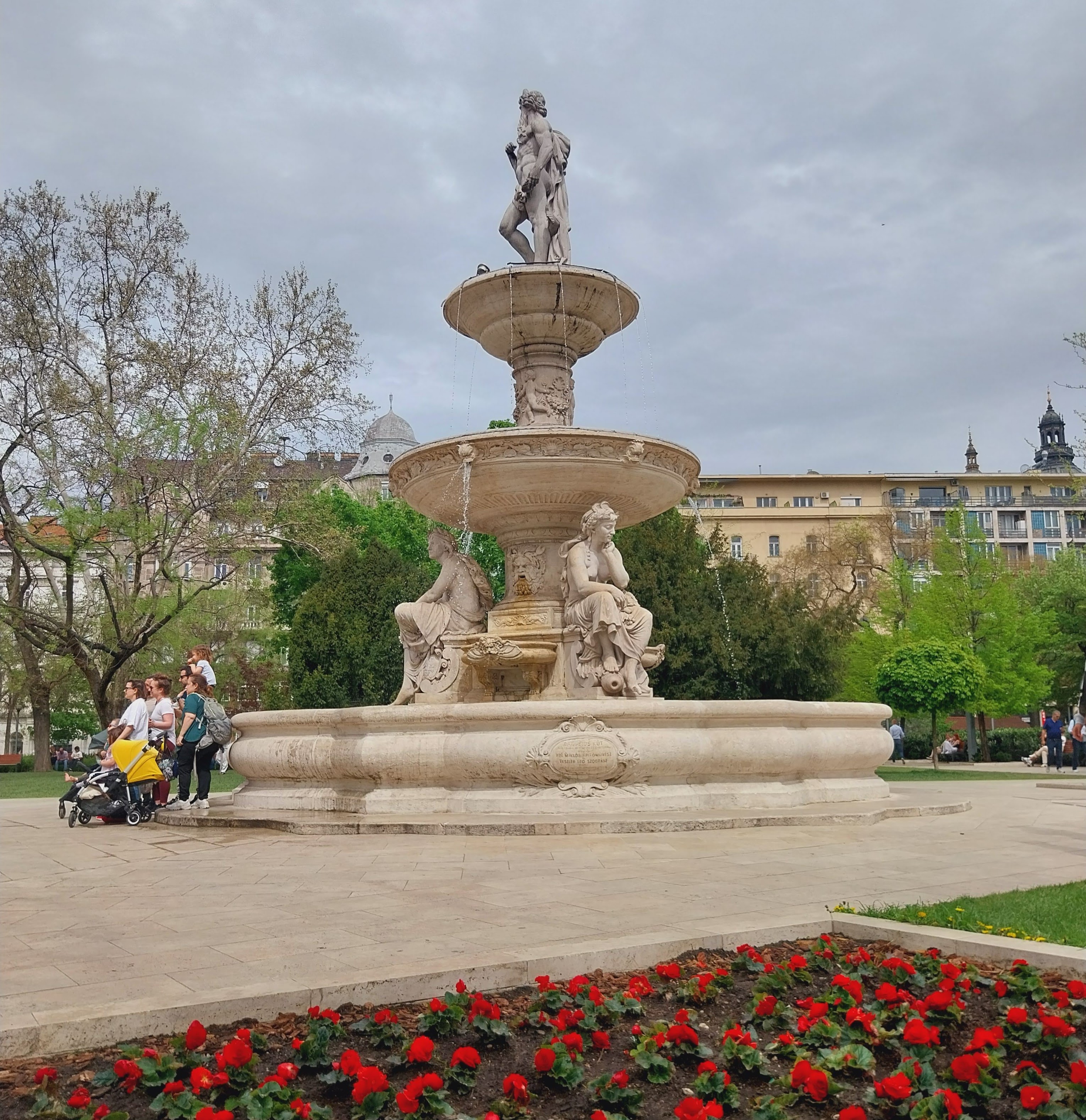
The fountain found a new home on Erzsébet Square and is now fully restored to its original splendour