

Day Trips From Budapest: Esztergom
In our new series we are feturing excellent one day trip ideas from Budapest in case you feel like you'd like to dive deeper into Hungary's historic and natural attractions.
 29.6 °C
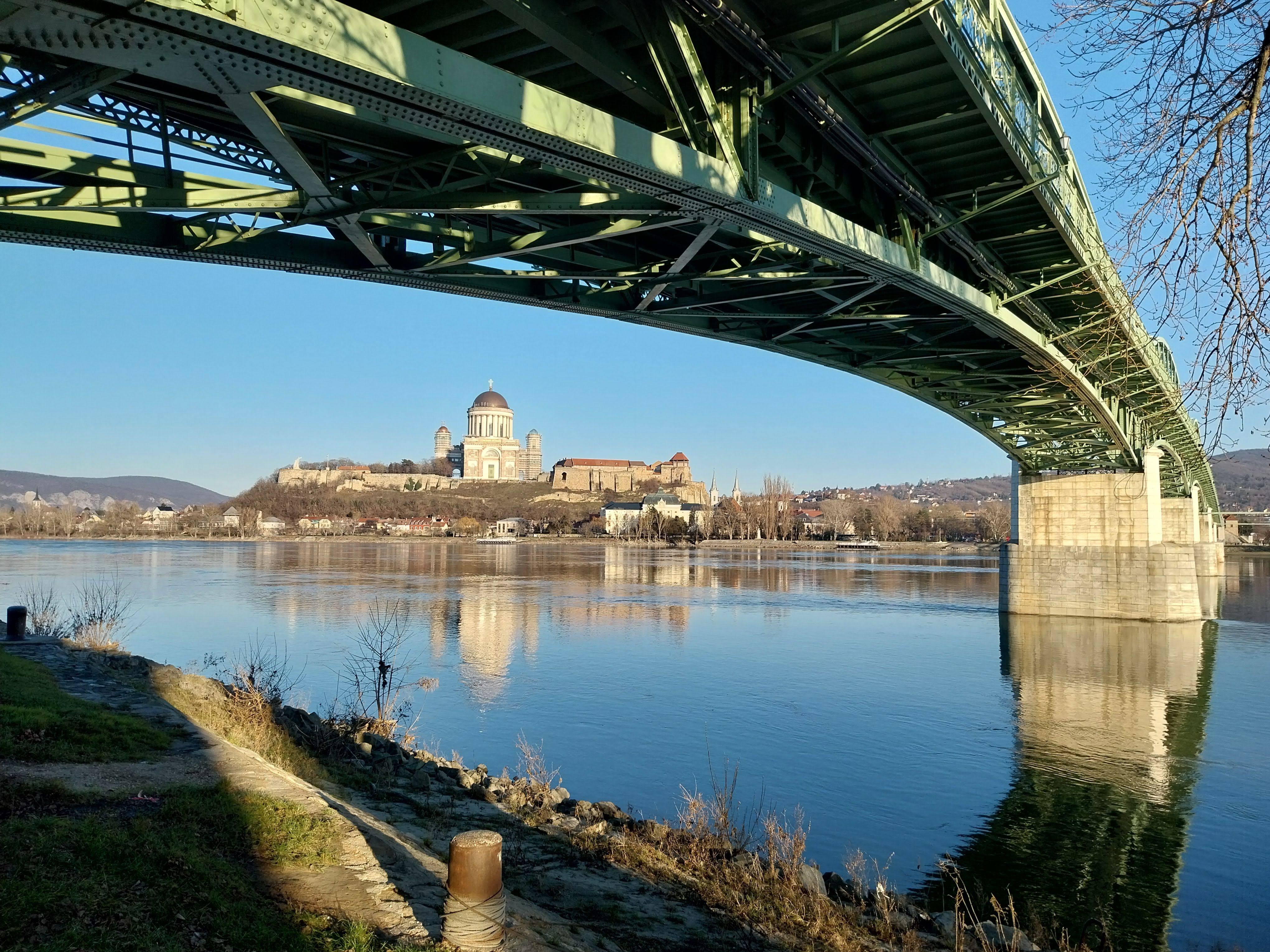
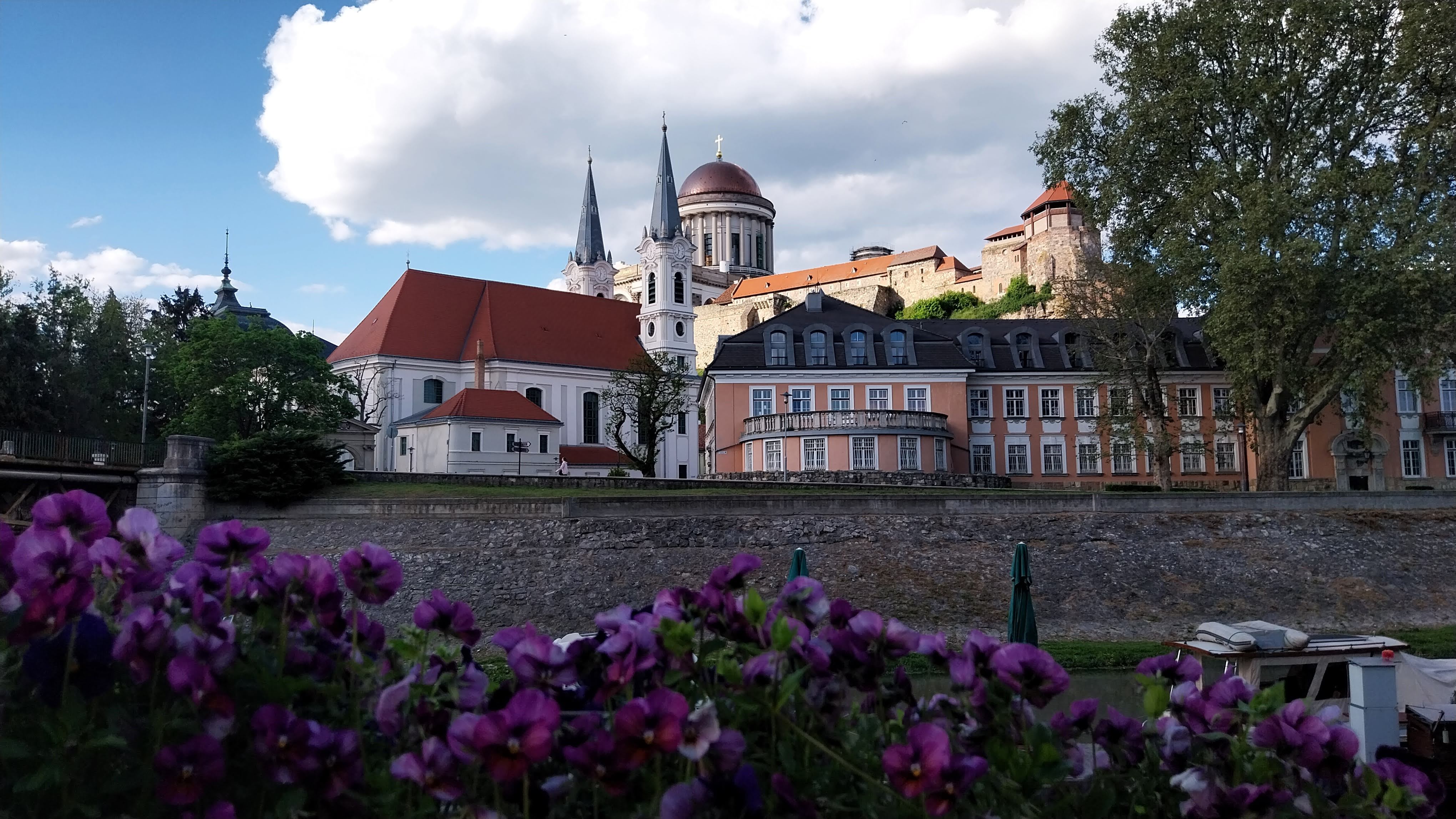
The Esztergom Basilica, officially the Basilica of the Blessed Virgin Mary Assumed Into Heaven and St. Adalbert, stands proudly above the Danube on Castle Hill, dominating the skyline of Esztergom, a city an hour outside of Budapest by train from Nyugati Railway Station. It is the mother church of Hungary and the country’s largest church, it is a site where history, art, faith, and culture intertwine, making it one of the country’s most important destinations for visitors.
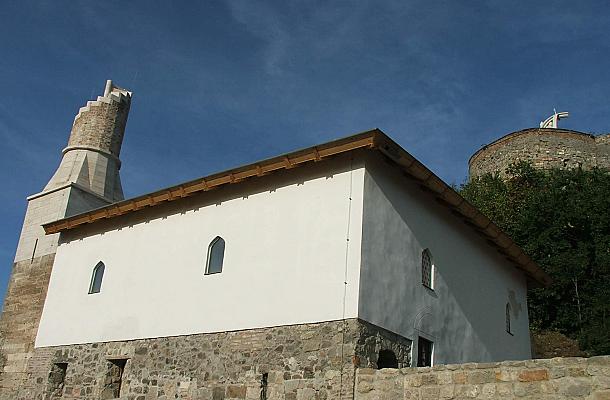
The medieval St. Adalbert's Church, the predecessor to the current Basilica
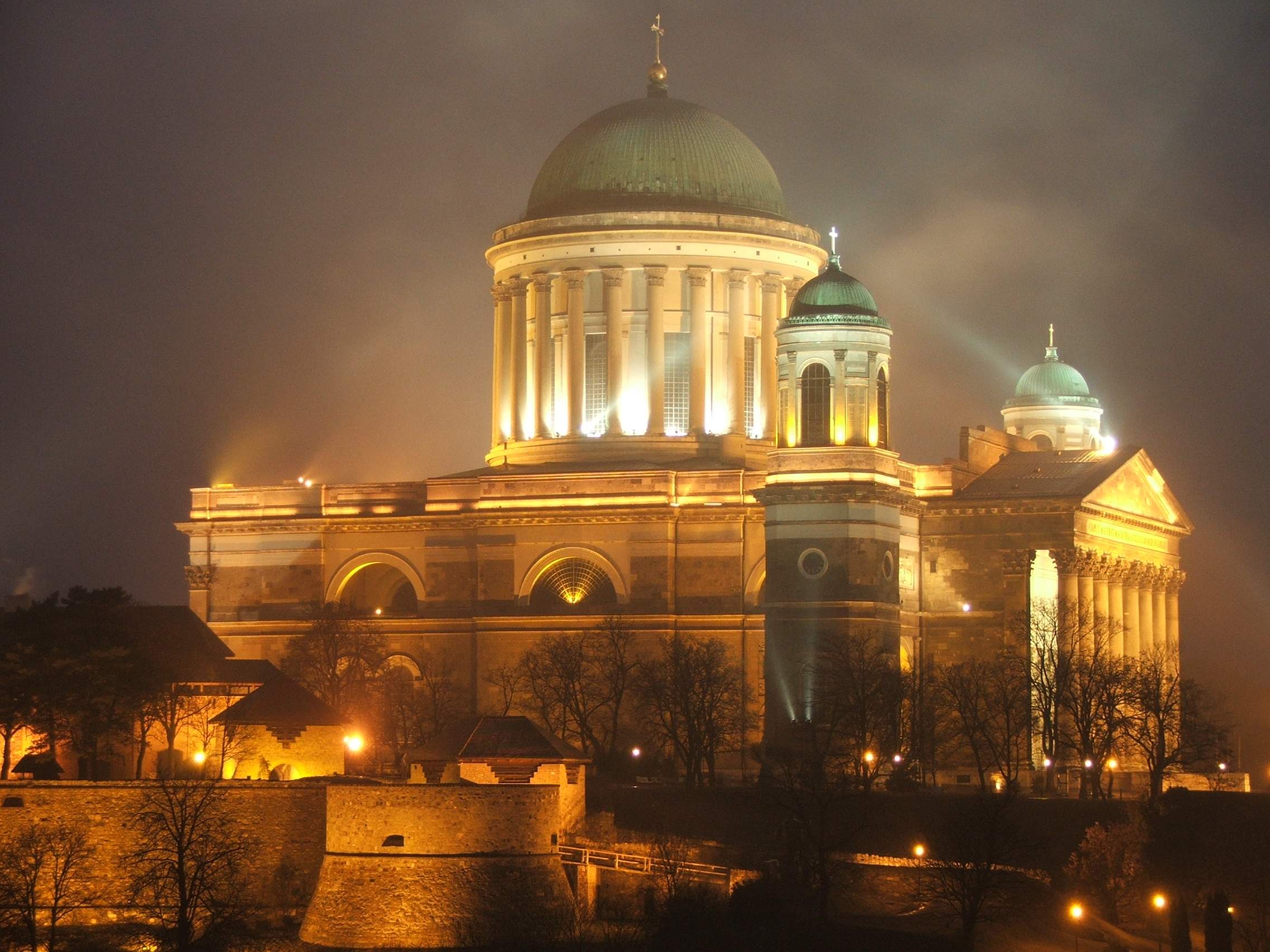
Construction of the present basilica began in 1822 by Archbishop Sándor Rudnay, after the archdiocese returned to the city after almost 280 years of exile thanks to the wars against the Ottoman Empire. Designed in a neoclassical style, the monumental project was led by architect János Pákh, Pál Kühnel, later continued by József Hild. The building was consecrated in 1856 in the presence of Emperor Franz Joseph I and celebrated composer Franz Liszt, who composed his Missa Solemnis for the occasion. Rising 100 meters high with a dome visible from miles away, it was the tallest building in Hungary until the construction of Budapest's MOL Campus in 2022.
Castle Hill preserves the footprints of several medieval churches whose remains were repeatedly rebuilt, repurposed or incorporated into later works. The northernmost early foundation is the Church of St. Stephen the Protomartyr, traditionally attributed to Grand Prince Géza (late 10th century) and treated in sources as the earliest parish on the hill. The central early seat was the Cathedral of St. Adalbert, commissioned by King Saint Stephen I and built c. 1001–1010 — this was the first cathedral of the new Hungarian archdiocese. Archaeology and documents also record a rotunda / “Round Chapel” tied to the Árpád royal palace (a small circular chapel of the St. Stephen era), and a St. Vid (St. Vitus) chapel that appears in a charter of 1284. The royal palace’s castle chapel (often called Béla III’s chapel in the literature) was a 12th–13th-century palace church whose medieval frescoes and forms influenced later rebuilding phases. In the early 16th century Cardinal Tamás Bakócz commissioned the famous Bakócz Chapel (1506–07), a small Italian-Renaissance sepulchral chapel carved of Süttő red marble; when the new neoclassical basilica was built the Bakócz Chapel was carefully dismantled (some ~1,600 numbered pieces) and re-installed as a side chapel of the present basilica. Today this chapel remains the only complete Renaissance building in Hungary.
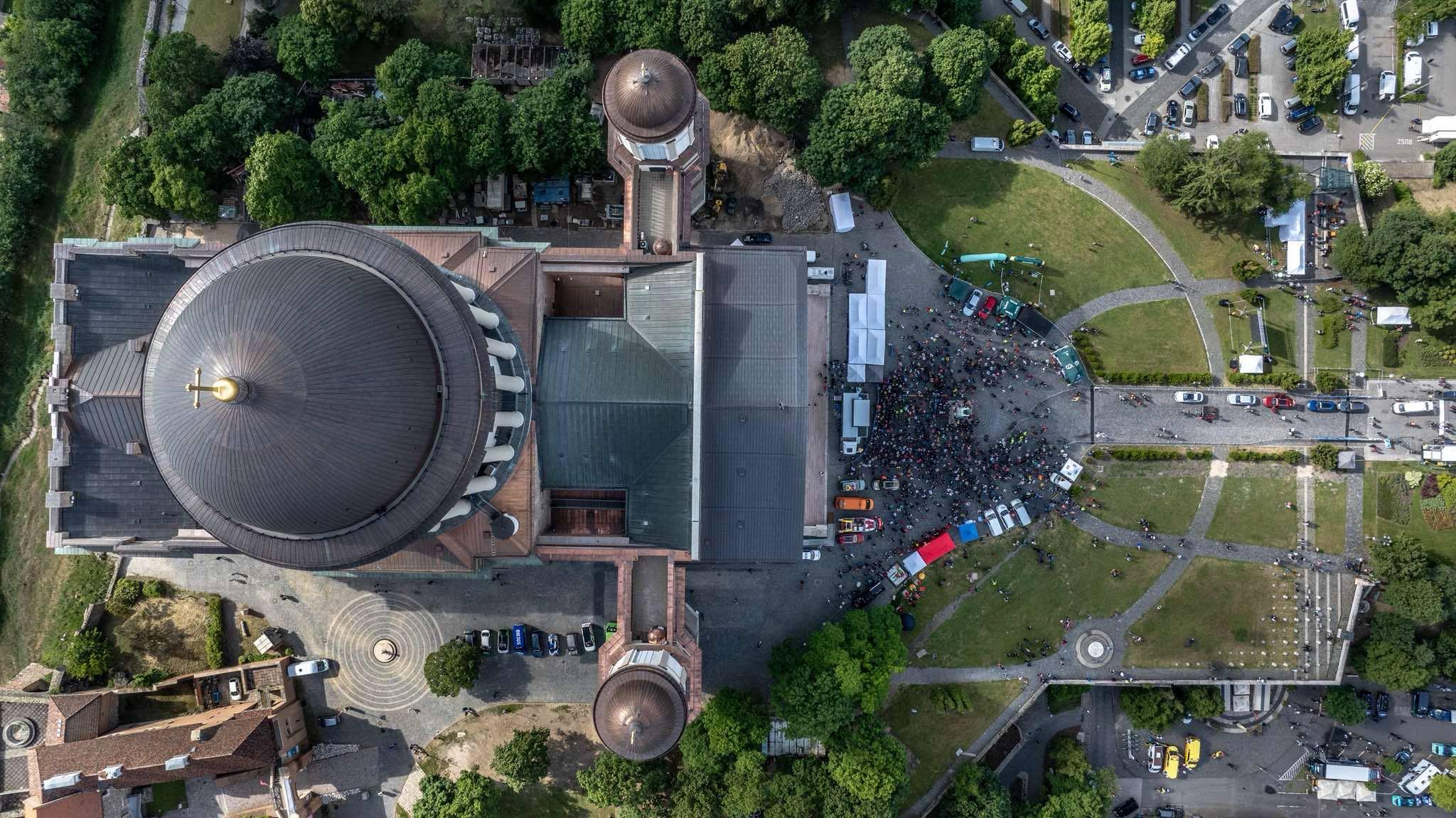 The 2025 centennial Tour de Hongrie ended at the cathedral
Description
The Esztergom Basilica is an awe-inspiring example of neoclassical grandeur. Its central dome, rising 71.5 meters above the sanctuary, is encircled by Corinthian columns and topped with a golden cross. Inside, visitors encounter vast open spaces filled with light, highlighting works of art and priceless treasures. The side chapels, richly decorated in marble, house relics, while the treasury preserves ornate vestments, manuscripts, and sacred objects. The church’s acoustics make it a venue for concerts, enhancing the visitor experience beyond its spiritual purpose.
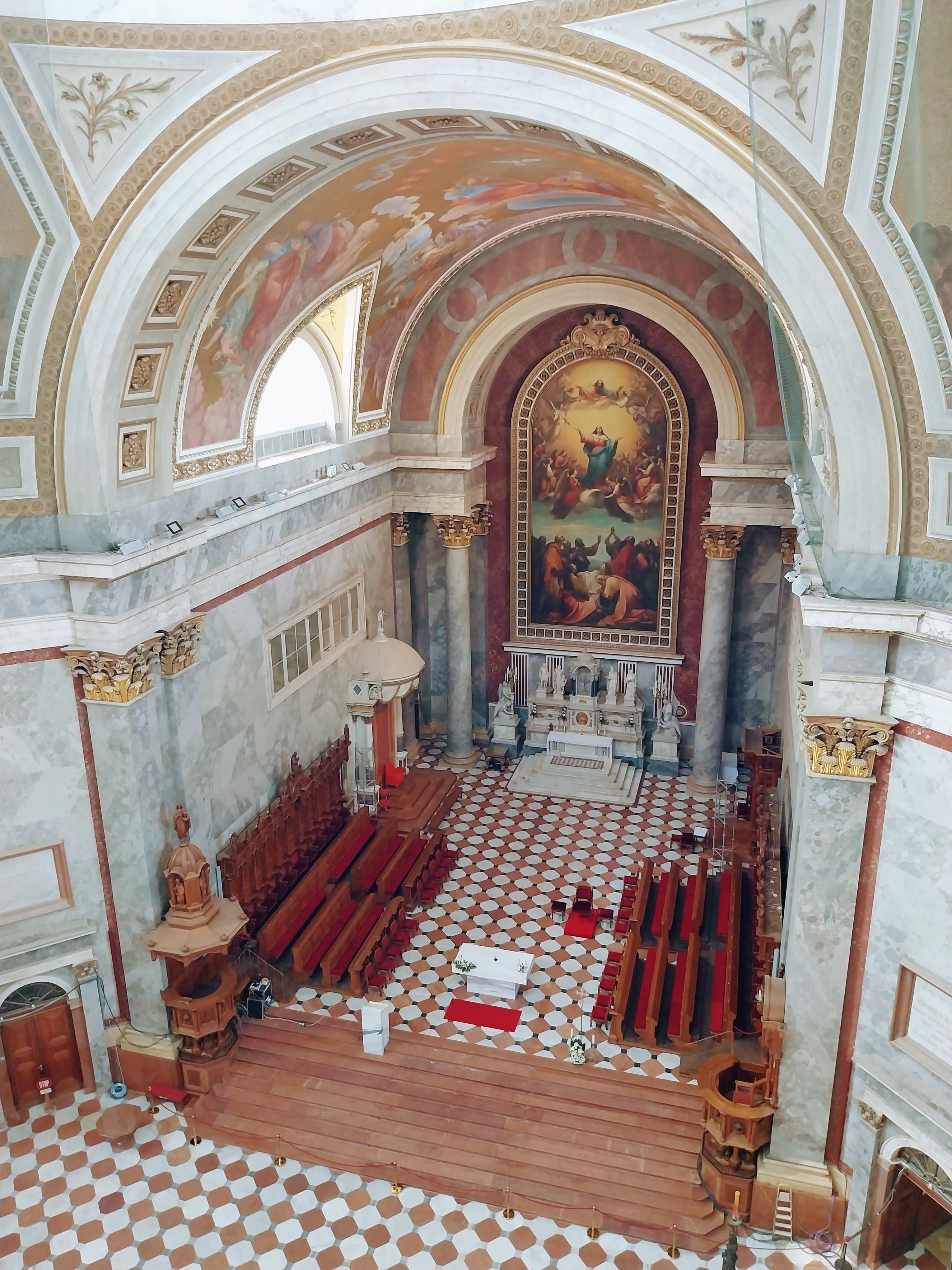
The basilica is remarkable for several record-setting features. It is Hungary’s largest church and one of the most impressive religious structures in Central Europe. Its walls, measuring up to 17 meters thick at the crypt, are considered the thickest of any building in Central Europe. Behind the main altar lies the world’s largest altar painting painted on a single canvas, Michelangelo Grigoletti’s monumental depiction of the Assumption of the Blessed Virgin Mary, completed in 1856. These unique features make the basilica not just a place of worship, but also a site of architectural superlatives.
Beneath the main church lies the atmospheric crypt, built in Old Egyptian Revival style. Completed in 1830, it serves as the resting place of cardinals, archbishops, and prominent figures of the Hungarian Catholic Church, such as Cardinal József Mindszenty. Its stark, solemn corridors contrast with the grandeur above, reminding visitors of the passage of time and the continuity of faith. The crypt is an evocative space where history and reverence meet. The basilica is not only a place of worship but also a treasure house of art and history. The Treasury displays one of the richest collections of ecclesiastical objects in Hungary, from medieval goldsmith masterpieces and ornate chalices to vestments, manuscripts, and reliquaries that tell the story of centuries of faith and craftsmanship. Visitors can also purchase tickets to climb up into the dome, where a walkway offers a breathtaking view of Esztergom, the Danube, and even across the border, way into Slovakia. High above the city, a panorama café welcomes guests free of charge — its glass-walled room provides one of the most stunning outlooks in the region. Before leaving, don’t miss the free exhibition on the history of the basilica’s renovation and the time capsule, which brings the centuries of building, destruction, and renewal into vivid perspective.
🎫Tickets
The church is free to visit, including the Bakócz Chapel, the café and the free exhibit in the café. You will need tickets to see the crypt, the trasury and the dome.
1st May 2025. - 30th September 2025.
|
1st October 2025. - 31st December 2025.
|
In our new series we are feturing excellent one day trip ideas from Budapest in case you feel like you'd like to dive deeper into Hungary's historic and natural attractions.
A centuries-old Ottoman mosque in Esztergom -an hour outside of Budapest- has taken on new life as the venue for a unique exhibition, revealing how the city’s Turkish-era past is still very much present in stone and memory.